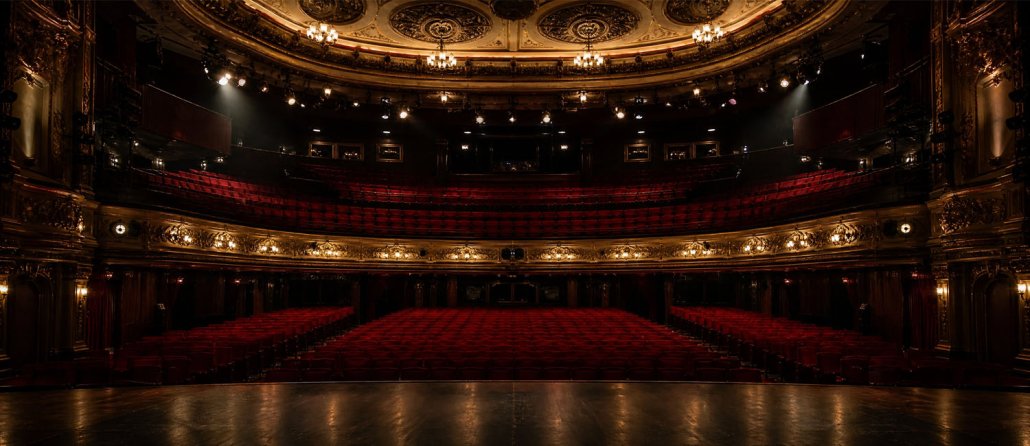
There is a peculiar anxiety that follows theatre around like a bad review. Every decade or so, a new technology arrives — cinema, television, home video, streaming — and with it comes the same breathless announcement: live performance is finished. The audience will stay home. The curtain will fall for the last time.
It hasn’t. And understanding why tells us something important about what theatre actually is, and why, in an age of algorithmic content and infinite distraction, it may matter more than it ever has.
The Myth of the Dying Art Form
The numbers, to begin with, don’t support the eulogy. The West End attracted over 15 million visits in its most recent full season — figures that have largely recovered to pre-pandemic levels. Regional theatre, from the Royal Exchange in Manchester to the Lyceum in Edinburgh, continues to draw audiences and produce work that transfers to London and beyond. But raw attendance data misses the point. Theatre has never been a mass medium in the way television is, and measuring its health against Netflix subscriber counts is a category error. Theatre was never trying to reach everyone. It was always trying to reach *someone*, completely.
What distinguishes live performance from every other storytelling form is not spectacle, or music, or even great acting — all of which exist on screen. It is the condition of shared presence. An audience and performers occupying the same room, breathing the same air, with no possibility of pause, rewind, or second-guessing the algorithm’s recommendation. This is not a limitation. It is the entire point.
Why Theatre Matters
Before asking whether theatre is relevant, it is worth being precise about what it actually does — and why that is irreplaceable.
Theatre is the only art form that happens *because* you showed up. A novel exists whether you read it or not. A film plays on without you. But a performance is constituted, in part, by the audience’s presence. The energy in the room on a good night — that specific, unrepeatable charge between stage and stalls — is not a side effect of the art. It is the art.
This creates something no other medium can manufacture: genuine shared experience. Not the mediated, asynchronous quasi-togetherness of watching the same series on the same streaming platform — but actual co-presence, in real time, with strangers. You laugh together. You fall silent together. You feel, for the duration of the show, that you are part of something larger than your own private life. In an era when loneliness has become a public health concern and civic life has grown threadbare, that is not a trivial thing to offer.
Theatre also uniquely demands something of its audience. It cannot be consumed passively. It requires you to be in a specific place at a specific time, to surrender your phone, to give your full attention to human beings doing something difficult and risky in front of you. That difficulty — the actor without a safety net, the live performance that could falter — is precisely what makes it matter. We are not watching a recording of a thing. We are watching the thing itself, as it happens, knowing it will never happen in quite this way again.
Why Now
We live in an era of extraordinary mediation. Our relationships are filtered through screens. Our news arrives pre-sorted by engagement metrics. Our entertainment is curated to confirm existing preferences. The experience of sitting in a theatre — particularly an uncomfortable seat in a fringe venue, next to a stranger, watching something that does not care whether you enjoy it — is increasingly countercultural.
Theatre has historically thrived in periods of social fracture. Elizabethan drama flourished amid religious upheaval and political instability — Shakespeare’s Globe was not a heritage site but a live wire running through a city in ferment. The great post-war British theatre that gave us Osborne, Pinter, and Wesker emerged from a society reckoning with class, empire, and what it meant to be modern. Periods of disorder produce a hunger for the kind of direct, embodied, communal storytelling that only the stage provides.
We are in such a period now. And Britain, with its extraordinary infrastructure of subsidised and commercial theatre — the National, the RSC, hundreds of producing houses from Chichester to Dundee — is uniquely positioned to meet that hunger.
The Uncomfortable Geography of Recovery
It would be dishonest to write about theatre’s resurgence without naming who is being left behind.
The national numbers are, on one reading, cause for optimism. The West End drew a record 17.64 million people in 2025, generating over a billion pounds in revenue. Audiences across the country continue to choose live performance at scale. But aggregate figures flatter a picture that, at the regional level, is far more uneven — and in parts of the south east in particular, genuinely alarming.
The SOLT and UK Theatre’s 2026 annual report is candid about this. While organisations in England outside London report comparative resilience in audience attendance, their overall business confidence tells a different story: nearly one in five report negative business expectations, compared to just seven per cent in London. More than a third of all theatre organisations expect to run a deficit this year. Among subsidised venues — the producing houses, the mid-scale regionals, the civic theatres that serve communities with no other access to live performance — that figure rises to over half.
The south east sits in a particularly awkward position within this geography. It is neither London, with its deep philanthropic networks and commercial infrastructure, nor the regions that have benefited most visibly from the “levelling up” of arts funding in recent years. Arts Council England’s 2023–26 investment programme explicitly redirected money toward previously under-served areas — places like Wigan and Gloucester were cited as beneficiaries of funding that had been “too low for too long.” The south east, perceived as prosperous, received no such corrective. The assumption that affluence and access to arts funding travel together is one that communities across Kent, Sussex, Surrey and beyond are now paying for.
What this means in practice is that venues which serve towns and suburbs — not glamorous enough for West End economics, not deprived enough for targeted intervention — are being squeezed from both sides. Costs have doubled over the past decade. Staffing, energy, maintenance and insurance continue to rise. Real-terms ticket prices have actually fallen since 2019, as venues absorb inflation rather than pass it on, sustaining access at the cost of their own margins. And local authority funding, which underwrites many of these buildings as civic assets, has been in structural decline for fifteen years.
The pipeline of new work — already uneven nationally — is particularly thin where producing houses lack reserves to commission it. Too many venues retreat to safe revivals and touring productions not out of artistic timidity but simple financial necessity.
None of this diminishes the argument for theatre’s relevance. If anything, it sharpens it. The communities now at greatest risk of losing their local theatre are precisely those where the case for live, communal, embodied storytelling is strongest — places where a theatre is not one option among many cultural amenities, but often the only one.
The question worth asking is not whether theatre can compete with streaming on streaming’s own terms. It cannot, and shouldn’t try. The question is whether a society that understands what theatre does — and what it costs a community to lose it — is willing to fund it accordingly.
If you want the version of this argument from inside one specific building on one specific Friday night, I’ve written that too.
The audiences, when they find their way into a room and the lights go down, are still holding their breath.
Whether those rooms will still be there in five years is a question that deserves an answer before the curtain comes down for good.

Bluesky Discussion
View on BlueskyNo replies yet. Be the first to comment on Bluesky!